

Crisis Leadership in 2026: Why Organizational Resilience Has Become the New Measure of Trust
- July 29, 2026
- Author: S&A Communications
- Category: Uncategorized
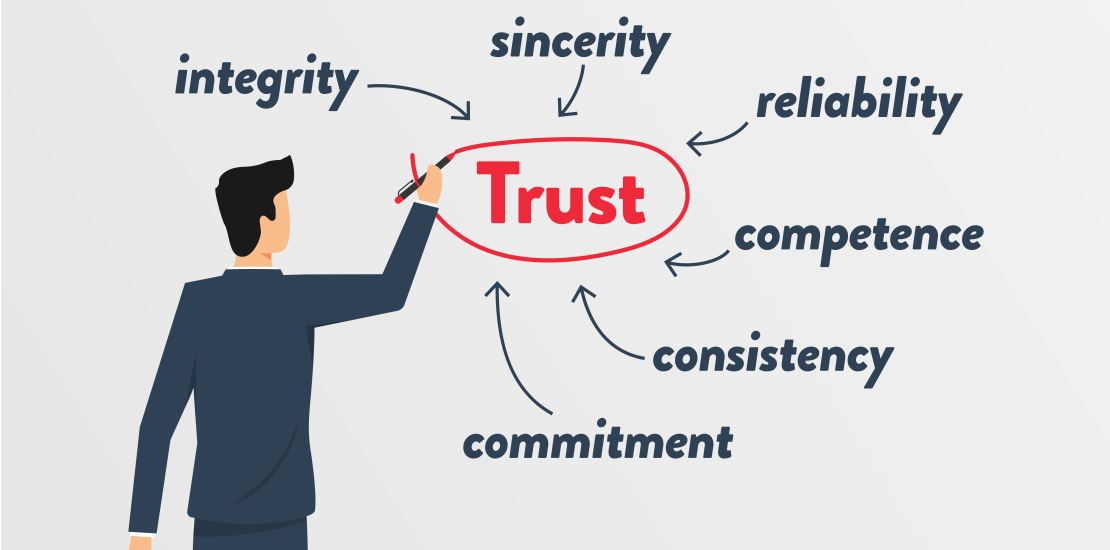
Trust has always been one of an organization’s most valuable assets. In 2026, it has also become one of its most visible performance indicators. Stakeholders are no longer evaluating resilience only through recovery times, operational continuity or the speed with which systems return to normal. They are watching how leaders communicate while facts are incomplete, whether decisions reflect both operational and human consequences, and whether promised improvements materialize after attention has moved elsewhere.
That broader scrutiny has changed the meaning of resilience. For years, it was treated primarily as an internal capability supported by business continuity plans, disaster recovery systems, cybersecurity defenses and crisis procedures. Those investments remain essential, but they no longer define preparedness on their own. Resilience has evolved from an operational competency into a leadership competency, measured not only by whether an organization recovers, but also by whether stakeholders retain confidence while recovery is underway.
The crisis itself is rarely the entire story anymore. Customers remember whether communication was timely and candid. Employees notice whether leaders were visible and decisive. Investors and board members assess whether management demonstrated foresight, adaptability and accountability. Regulators and community partners continue evaluating an organization’s actions long after systems are restored and headlines disappear. Recovery is now only one chapter in a much longer leadership narrative.
Throughout June, I examined how cyber resilience, artificial intelligence, organizational adaptability and stakeholder memory are converging. Viewed together, these themes point to a larger conclusion: the organizations most likely to be trusted tomorrow are not necessarily those that avoid disruption. They are the ones that prepare intentionally, adapt confidently and continue earning credibility long after the immediate pressure subsides.
1. Resilience Now Extends Beyond Business Continuity
For decades, organizations evaluated resilience through operational questions. How quickly were systems restored? Could customers still access essential services? Did contingency plans function as designed? These questions remain fundamental, but they now represent only part of the evaluation. Stakeholders also want to know how leadership performed while events were unfolding and whether the response reflected the organization’s values as well as its technical capabilities.
This shift should change how organizations approach preparedness. Crisis communication can no longer operate independently from operational response because every operational decision has a communication consequence, just as every public statement shapes perceptions of operational competence. The strongest organizations integrate communications, operations, legal counsel, human resources, information technology and executive leadership before a crisis occurs rather than attempting to coordinate them for the first time under pressure.
Modern crises rarely remain confined to the department where they begin. A cyberattack becomes a customer experience and financial issue. A supply chain disruption becomes an investor relations concern. A workplace incident raises questions about culture and governance. What begins as a technical problem can quickly become a broader test of organizational credibility. This interconnectedness is why federal preparedness guidance emphasizes communications, information technology recovery and continuity planning as parts of the same process.
Organizations that recognize this reality invest differently. They conduct simulations that test executive judgment alongside operational recovery. They clarify decision-making authority, escalation thresholds and stakeholder responsibilities before they are needed. They also recognize that every exercise is preparing leaders, not just systems, to perform under pressure.
2. The Change Healthcare Attack Demonstrated How Quickly Crises Expand
The 2024 cyberattack against Change Healthcare remains one of the clearest examples of how rapidly a modern crisis can spread across an interconnected system. What began as a cybersecurity incident affected hospitals, physician practices, pharmacies, insurers and patients across the United States. Payment processing was interrupted, prescription fulfillment slowed and providers experienced significant financial strain while attempting to maintain care.
The American Hospital Association’s survey of nearly 1,000 hospitals found that 74% reported a direct impact on patient care and 94% experienced a financial impact. Those findings illustrate why third-party resilience has become inseparable from organizational resilience. An institution may have strong internal controls and still face a significant crisis when a critical vendor or platform fails.
The most revealing aspect of the incident was the breadth of expectations that followed. Providers needed realistic restoration timelines, patients needed clear explanations about potential care disruptions, regulators sought answers about preparedness and industry leaders questioned whether sufficient contingencies existed. Leadership had to manage operational recovery, stakeholder communication, financial implications and public confidence simultaneously.
That pattern now appears across industries. Organizations do not experience isolated crises; they experience interconnected crises in which operational, legal, financial and reputational consequences develop at the same time. Stakeholders understand that no organization can eliminate every risk. They do, however, expect leaders to anticipate complexity, communicate candidly and demonstrate that lessons learned will strengthen the organization moving forward.
3. Artificial Intelligence Is Redefining the Information Environment
Artificial intelligence is accelerating many of the changes already reshaping crisis management. Organizations are using it to improve monitoring, identify emerging issues, summarize large volumes of information and support faster decision-making. These capabilities can strengthen situational awareness when events are developing quickly and leadership teams are working with incomplete information.
At the same time, artificial intelligence has lowered the barrier to producing convincing misinformation. Synthetic audio, manipulated video, AI-generated imagery and increasingly sophisticated text can be created and distributed in minutes. Federal cybersecurity agencies have warned that deepfakes and other forms of synthetic media create growing risks for organizations, including disinformation designed to cause confusion, undermine confidence or influence public behavior.
The implications for crisis planning are significant. Traditional plans were designed around responding to events that actually occurred. Increasingly, organizations must also prepare for false executive statements, fabricated customer experiences, manipulated videos or synthetic evidence that appears credible before facts can be verified. The challenge is not only detecting false content. It is deciding when to respond, what evidence to provide and how to prevent a correction from amplifying the original claim.
Technology will help organizations identify these threats more quickly, but it will not replace human judgment. Leaders must still determine when speed matters more than completeness, when empathy should take precedence over efficiency and how much information can responsibly be shared while an investigation continues. Credibility built before a crisis becomes one of the strongest defenses available when misinformation appears.
4. Confidence Is Built Before It Is Needed
Credibility cannot be manufactured in the middle of a crisis. It accumulates over time through consistent leadership, transparent communication and demonstrated accountability. When disruption occurs, organizations are drawing against a reservoir of confidence they have spent months or years building. Stakeholders interpret today’s response through the lens of yesterday’s behavior.
That principle applies across industries. A healthcare system that has communicated openly with patients enters a crisis with more credibility than one that communicates only when required. A financial institution that has demonstrated prudent governance is more likely to receive the benefit of the doubt than one with a history of inconsistent messaging. Manufacturers, universities, technology companies and nonprofits operate under the same reality: reputation is not separate from resilience; it is evidence of whether stakeholders believe the organization can navigate uncertainty without compromising its mission or values.
This is why resilience must be cross-functional. Communications professionals need to understand operational realities, while operations leaders need to appreciate how technical decisions affect stakeholder perceptions. Legal counsel, human resources, executives and customer-facing teams all have roles because stakeholders experience the organization as a whole, not as a collection of departments.
Preparedness therefore extends beyond maintaining a crisis manual or conducting an annual tabletop exercise. It requires a culture in which leaders evaluate emerging risks, practice difficult decisions and refine how information flows internally and externally. CISA’s Cyber Resilience Review similarly frames resilience as an organization-wide capability that supports continuity of critical services during periods of operational stress.
5. Stakeholders Remember Longer Than Organizations Expect
Perhaps the most significant shift in crisis leadership is not how quickly stakeholders react, but how long they remember. Organizations tend to measure recovery through operational milestones: systems are restored, facilities reopen, supply chains stabilize and revenue begins to recover. Once those objectives are achieved, leadership naturally turns toward future priorities. Stakeholders rarely follow the same timeline.
Employees continue evaluating whether promised workplace improvements occurred. Customers remember whether concerns were acknowledged or dismissed. Investors look for sustained evidence that vulnerabilities were addressed rather than temporarily contained. Regulators monitor compliance, and community partners remember how an organization behaved when the pressure was greatest. A crisis may have ended operationally while the reputational assessment is still unfolding.
The transportation sector illustrates this extended timeline clearly. National Transportation Safety Board investigations continue from initial fact gathering through final reports and safety recommendations, and the agency monitors implementation of those recommendations over time. Public understanding therefore develops in stages, shaped not only by the original incident but also by subsequent findings, corrective actions and evidence of organizational learning.
The same pattern applies to data breaches, product recalls, workplace failures and service disruptions. Initial response matters, but long-term credibility is determined by whether the organization demonstrates measurable improvement after attention declines. Every update, policy change, investment and leadership decision contributes to the narrative stakeholders continue forming.
6. From Crisis Response to Organizational Adaptability
These expectations require organizations to rethink what success looks like. Traditional crisis management emphasized speed: restore operations, contain reputational damage and return to normal. Speed remains essential because delayed decisions create uncertainty, but speed without adaptability can produce its own problems. Organizations focused only on restoring the status quo may overlook the weaknesses the crisis exposed or the opportunity to build something stronger.
The most resilient organizations ask harder questions throughout recovery. Which assumptions proved incorrect? Where did decision-making slow? Which stakeholders lacked the information they needed? How should governance, communications or operational procedures evolve? Answering these questions requires humility as much as expertise. Leaders who acknowledge uncertainty, seek outside perspectives and communicate honestly about lessons learned often emerge with stronger relationships than those who project certainty before the facts support it.
This emphasis on adaptability is especially important because artificial intelligence, cyber threats, supply chain complexity, workforce expectations, geopolitical uncertainty and regulatory change are reshaping risk simultaneously. Leaders cannot predict every challenge, but they can build organizations that absorb disruption, learn quickly and adapt without losing sight of the people who depend on them.
That is the essence of modern resilience. It is not the absence of disruption, nor simply the ability to recover. It is the capacity to adapt, learn and sustain confidence through continual change.
7. The New Measure of Trust
Technology can accelerate communication, identify patterns and help leadership teams recognize emerging risks, but it cannot replace judgment. It cannot decide when empathy should take precedence over efficiency, how much information should be shared while facts are developing or what accountability requires after trust has been damaged. Those responsibilities continue to belong to leaders.
That reality should influence how organizations invest in preparedness. Cybersecurity, business continuity, artificial intelligence and operational resilience should be viewed as enablers of effective leadership rather than substitutes for it. The organizations that perform well under pressure are not always those with the most sophisticated technology. More often, they are the ones whose leaders have built collaborative cultures, clarified authority, practiced difficult scenarios and established credibility before disruption occurs.
Those investments rarely attract attention during normal operations, yet they become a competitive advantage during a crisis. Prepared leaders make decisions with greater confidence because difficult tradeoffs have already been discussed. Communications teams respond more effectively because they understand how operational choices are being made. Employees become credible ambassadors because they are informed rather than left to speculate. Stakeholders may never see the planning, but they recognize the alignment it creates.
Resilience should therefore be understood as a strategic asset, not a defensive function. PwC’s 2026 analysis of its global CEO survey found that stakeholder trust concerns are widespread and linked to issues such as artificial intelligence safety, data privacy and corporate transparency. In that environment, trust is no longer earned only through success. It is earned by how leaders respond when success becomes harder to achieve.
Resilient organizations are not distinguished because they avoid every disruption. They are distinguished because they prepare intentionally, communicate transparently, adapt intelligently and demonstrate accountability after immediate attention has shifted elsewhere. Every crisis becomes part of a larger leadership story that stakeholders will continue evaluating well beyond the final media report or restoration of normal operations.
Organizational resilience has therefore become far more than a measure of readiness. It is one of the clearest indicators of character, competence and leadership credibility. In an era when confidence is increasingly difficult to earn and remarkably easy to lose, that may be the most valuable asset any organization can build.